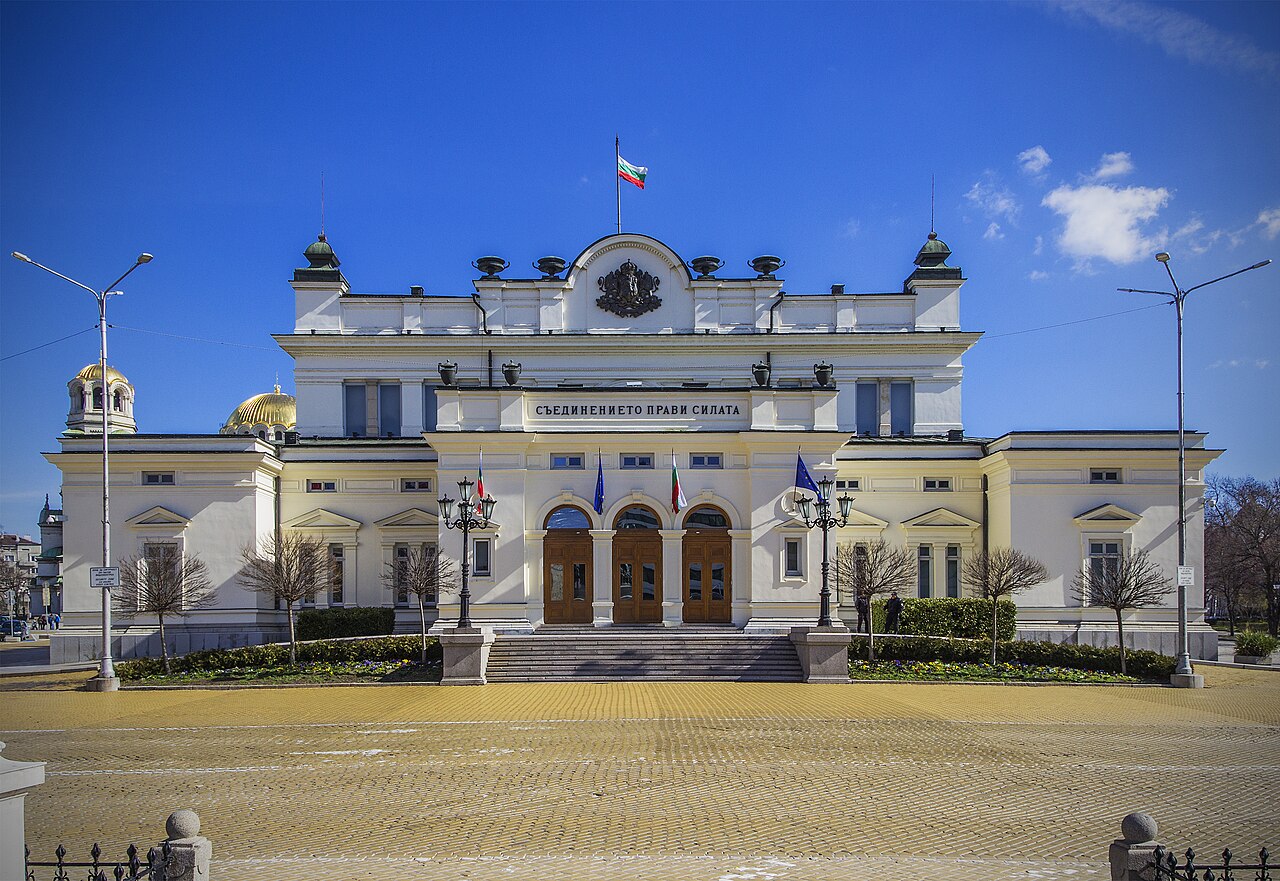
Bulgaria's Central Election Commission published the official seat allocation for the 52nd National Assembly late on Wednesday evening. Progressive Bulgaria will hold 131 seats, while GERB–SDS won 39, according to the commission's final tally.
Continue the Change–Democratic Bulgaria secured 37 seats, the Movement for Rights and Freedoms won 21, and Revival took 12 in the 240-seat chamber.
The distribution follows Saturday's parliamentary election, Bulgaria's eighth in five years. The commission allocated mandates across 24 multi-member constituencies covering the entire country, from Blagoevgrad in the southwest to Yambol near the Turkish border.
Coalition Talks Ahead
Progressive Bulgaria's 131 seats fall short of the 121-seat majority needed to govern alone. Coalition negotiations will determine who forms Bulgaria's next government.
The commission is expected to announce the named list of MPs on Saturday. Coalition talks in Bulgaria's multi-party system typically take several weeks, sometimes longer. The official timeframe and legal procedures for government formation following this seat distribution have not yet been clarified by authorities. During this period, government offices continue existing operations under caretaker arrangements.
How Bulgaria's Electoral System Works
Bulgaria uses closed-list proportional representation across 24 constituencies. Parties must exceed a national threshold of 4% to enter parliament, votes for parties below that threshold do not translate into seats. Voters cannot select individual candidates; they vote for party lists, and seats are allocated proportionally within each constituency using the Hare-Niemeyer method.
This differs sharply from the UK's first-past-the-post system, where constituency winners take single seats regardless of vote share. Bulgaria's approach typically produces multi-party parliaments requiring coalition governments. It's rare for any party to govern alone.
Why This Matters for British Expats
The new parliament will shape domestic policies that affect foreign residents, including administrative procedures, healthcare access, and residence permit processing. British nationals in Bulgaria should note that coalition governments are standard here, and policy continuity can shift depending on which parties enter government together.
Routine functions, residence permit applications, renewals, consular services, continue as normal during government formation. The UK embassy in Sofia has not issued specific guidance following the election results.
It is not yet clear how long coalition talks will take or which combination of parties will attempt to form a government. Bulgaria's proportional system makes stable coalitions harder to construct than in majoritarian systems.
Invalid Ballots
The commission recorded 69,222 invalid paper ballots from Saturday's vote. Invalid ballots do not affect seat distribution but are counted in turnout statistics.
Background: Fragmented Parliament
Five parties cleared the threshold. No party holds anywhere near a working majority. Bulgaria has had eight elections in five years, a pattern of instability that coalition negotiations may or may not resolve this time.
British expats familiar with Westminster's dynamics may find this landscape unfamiliar. Bulgaria's parliament rarely delivers single-party mandates. Expect weeks of talks, possibly a minority government, possibly another election if talks fail.