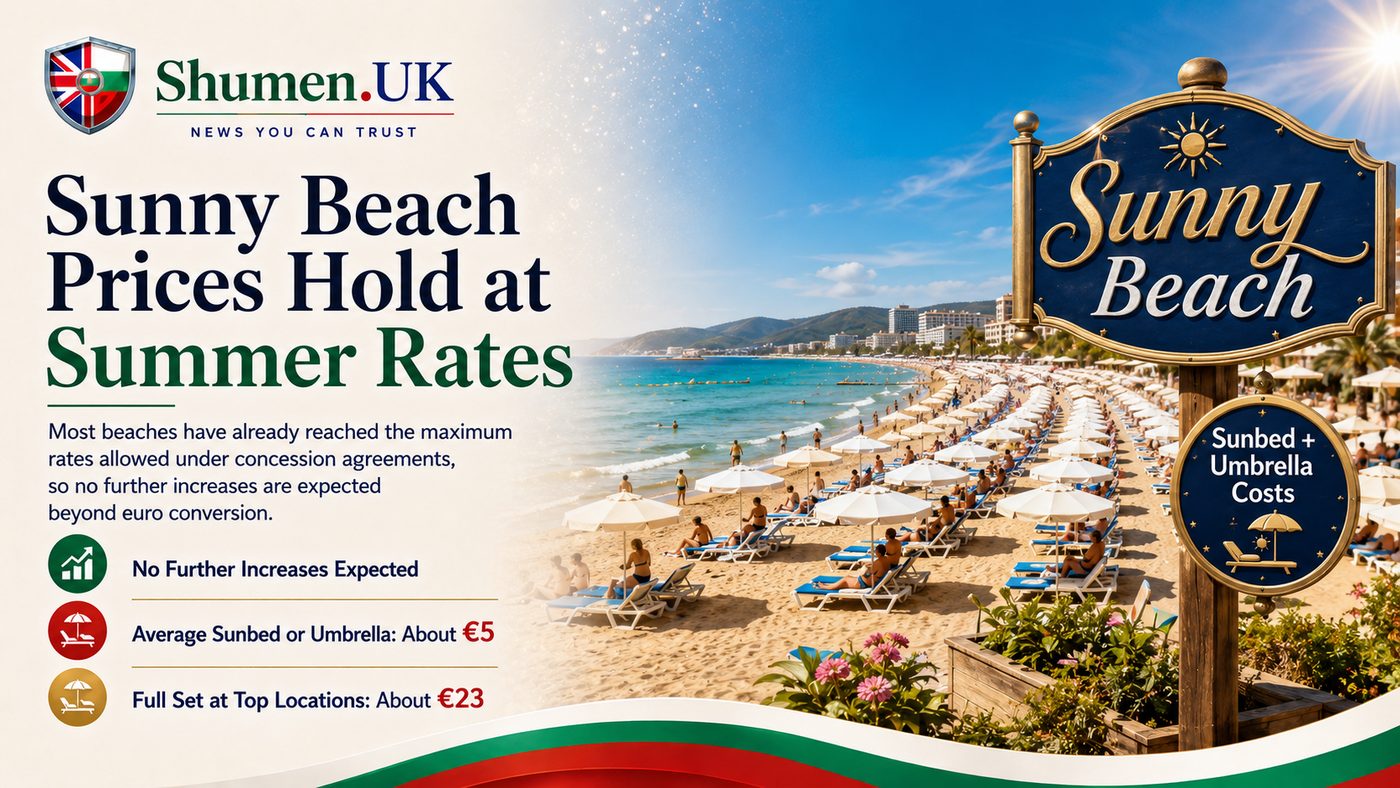
Bulgaria's Black Sea resorts are displaying beach service prices in euros this summer for the first time, following the country's euro adoption on 1 January 2026.
No Summer Price Rises
Inspections along the southern coast confirm most beaches have already reached the maximum rates allowed under their concession agreements. That means no further increases are expected for sunbeds and umbrellas beyond straightforward currency conversion.
Industry estimates put the average price for a sunbed or umbrella at around €5, with full sets (two sunbeds plus umbrella) reaching approximately €23 at the most expensive locations.
Simeon Tsvetkov, chair of the Association for the Development of Black Sea Beach Management Activities, highlighted the wide pricing gaps across the coast. "The beach in Burgas has the second lowest price. There is one beach in Bulgaria where I think the price is 36 stotinki under the old system, under the new system that should be €0.18. Here, the price will be €0.60, from 1.20 BGN last year, and when it comes to currency conversion we round in favour of the customer. At the most expensive beaches, a full set reaches around €23."
Possible Loopholes
Concession holders may explore limited legal options for additional charges, including separating items previously bundled with beach equipment such as mats or small tables. This remains under consideration rather than confirmed policy, but it's worth checking final bills carefully if you're renting beach equipment this summer.
Slaveya Toneva, a beach café operator, confirmed prices remain stable for now. "At the moment, the prices we offer to customers are absolutely reasonable. We have no increase compared with what our suppliers have prepared. Our frappé is €3, and our coffee is currently €1.99."
Still Cheaper Than Greece or Turkey
Bulgaria continues to offer some of the most affordable beach services in Europe. In Greece and Italy, daily costs for umbrellas and sunbeds typically start around €20 and rise significantly in premium resorts.
Prof. Stoyan Marinov from the Varna Tourism Chamber said the country maintains its competitive advantage despite inflation. "Despite inflation and rising prices, we are maintaining our competitive advantage in terms of value for money. A one-week all-inclusive holiday in a four-star hotel for two people in Bulgaria during July is in the range of €1,600 to €1,700. The same product in Turkey is around €200 more expensive, while in Greece the price exceeds €2,000."
What This Means for British Expats
For British people living in Bulgaria or planning a summer visit, the euro pricing simplifies budgeting and makes direct comparisons with other Mediterranean destinations straightforward. No more mental arithmetic converting leva.
Bulgaria's Black Sea coast remains a cost-effective option compared to Greece, Turkey, or Italy. The conversion to euros doesn't change the underlying value, it just makes the maths easier.
However, the tourism sector in Varna warns the upcoming season may face headwinds from geopolitical uncertainty, higher fuel costs, and a reduction in some charter flight operations. These are potential risks rather than confirmed disruptions, but they're worth factoring into travel plans.
British tourists should check flight schedules carefully and consider booking earlier than usual if planning summer travel to Bulgarian coastal resorts. While prices remain competitive, the combination of fuel volatility and potentially reduced charter capacity means seats may be scarcer this season.